


Is that Optimization or not?
Optimization is a very hot topic for the users who work with V-Ray, and also any other render engines of course. But most of times all the energies are focused (and sometimes wasted) just on a very specific aspect of the optimizion: Render Settings. By the way Optimizating regards every single moment in production, from the reserach to the final render
95% of tutorials in the web talk about Render settings, it’s fine. Now clear the mind and think with yours: if producing a single image needs 100 hours of production is total, why should I invest all my energies on render settings? Is really my goal saving some hour in the final render, or can I do better, much better?
What if I could optimize the entire process?
This is my goal with 5SRW
COMPOSITION, Step-1
How many books, videos and tutorial of photography did you study to learn composition?

Triangles, Golden ration, thirds, balancing, lines, patterns, view point, depth, frames..
Composition is not instinctive, composition has rules and technicques you need to know. I give some points along the course, but the learning curve is long. I have 14 books about composition in my office, I studied it a lot! I remember years ago how many time I lost on it: I was never sure about the result, I continually changed my ideas. Now I see the scene and immediately I have a clear idea, a vision in my mind of 3-4 shot I could take. Few minutes, instead of hours.
Creating good compositions in few minutes is optimization or not?
LIGHTING, Step-2
How much books, videos and tutorial of photography did you study to learn lighting?

It’s a little bit hard to find material to study lighting, by the way in my office I have 11 books about this topic. I study and read them again continually, lighting is something depth you cannot assimilate in few months. You need years to have a very clear vision about how light is working in your scene. This is the best point of 5SRW Course and I’m very happy to have invested so many years on this to share it in the course!
Less lights you use, the better the lighting and it’s not obviuos how to approach correctly the lighting! How long do you take to create a professional lighting? Lighting is just placing a couple of lights in the right places.. but it’s very hard to do this task. You can do infinite trials, you can add much more lights than the necessary. You can add useless lights that don’t contribute to your hiearchy. Unnecessary lights produce bad lighting and especially increase render times.
Creating an effective lighting is optimization or not?
MATERIALS, Step-3
I’m sure you already read this type of sentence before:
<< Observe materials and replicate in your renders >>
50% true… and what’s the other 50%? Don’t forget our renders are basically images, pictures, so it’s not simply replicating materials: it’s “communicate” the nature of materials. Reflections, refractions ecc don’t appear automatically in you render if you just enable the option. You need to think as a photographer, recreating the right situations (most of times working with lights) to communicate the material

Materials with so many nodes, 50 or 100 subdivisions, with textures into textures into textures… are the more unoptimized thing in the world. Make this experiment: take an ‘hypercomplex material’ and make it simple. If you do it correctly you’ll get 99% the same result, in half time. Of course simplifying is not easy, but it’ logical if you keep in mind photographic rules.
Using the strictly necessary and getting great materials is optimization or not?
FINAL RENDER, Step-4
Finally the topic that focus all the energies: “render times”, just the tip of the iceberg
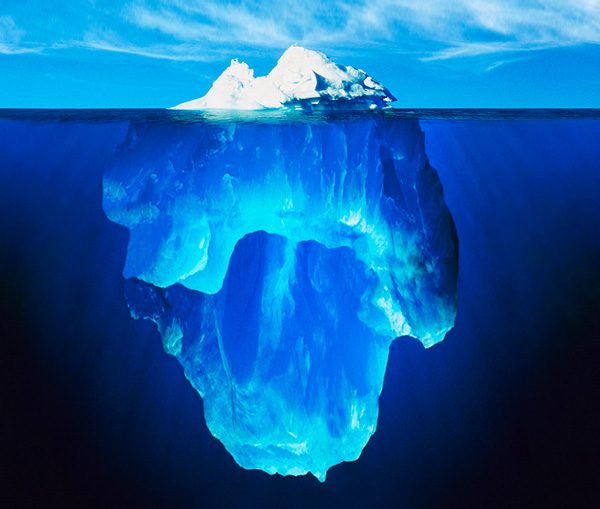
Are render settings important? YES, they’re very important. Now have a look on the big picture: Is the entire process optimized? Are you mastering the entire ‘iceberg’?
Becasue if you never seriously optimized composition times, lighting times, materials times, you should do it. Your performaces could improve A LOT.
In my course/method I propose to study and optimize the entire approach in order to reduce “production times” from 100h to 50h. If you’re able to master this then it could make sense talking how to render in 1 hour instead of 2. But if you work randomly, if you have not clear ideas, you’re not able to handle lights, to take quick decisions.. is it really important be so focused only on “render times”?
“Without theory, you’re like an army without captain” Leonardo said – I prefer to push my students/members using a fix final render setting (maybe a little bit over loaded) to address all the energies in optimizing the entire process that really makes the difference in terms of final result and time saving.
POST PRODUCTION, Step-5
Real pictures, real footages, basically everything captured in the real world need post production, and renders as a simulation of the real world
We basically need color correction, contrast and color grading. Photographically speaking there are well known techiniques to improve tridimensionality, mood, colors, contrast ecc.. if you study how real photographers performe this task, you have all you need.
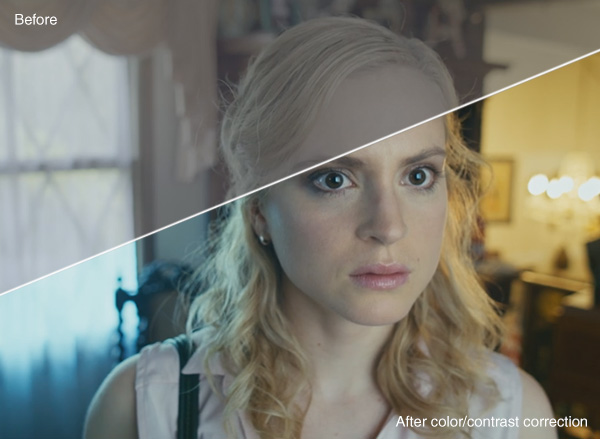
(*) Enjoy this video – Color & Contrast correction, no render elements of course
Render elements: another undeserved “hot” topic. Are Render Elements important? YES. Are they magic? NOPE. Don’t think that using render elements corresponds automatically to improve images. Use render elements according to your vision. Clear the point you want to reach, then use the minimum necessary tools to get it.
Conversely If you start working with tools, but you don’t have in mind what you want, you will waste a lot of hours.
Photographic Post production (in average) could be completed in 10′-15′. The right time to create 2-3 versions and then decide the most interesting one. Developing the “photograph eye” allows you to have more and more clear visions of the final result you’re looking for.
Is the entire approach optimized or not?
CONCLUDING
Final settings are of course important to reduce “render times“. But there are a lot of other things that contribute to reduce “the entire production times” a lot. Much, much more than the just render settings can do.
Ask to your self how much time you invested in studing render settings – AND – how much time you invested in composition, lighting, materials photography.
Are you working to optimize the entire production times or are you still thinking on the tip of the iceberg?
[sc:author ]