


Best Freelance Platforms for Architectural Visualization
If you’re looking for the best freelance platforms for architectural visualization, you’re probably not just chasing gigs—you’re building a career.
I’ve tested them all: the popular ones, the obscure ones, even the ones that no one talks about anymore. And in this guide, I’ll share what actually works (and what doesn’t) based on real, personal experience.

By Ethan Varela, Architectural Visualization Instructor at LearnVRay
I remember the first time I tried freelancing online.
I had a portfolio full of good renders… and no idea where to find clients.
So I joined a bunch of platforms, sent out proposals everywhere, and waited. Crickets.
The problem wasn’t my work. It was the mismatch between what I offered and how those platforms worked.
Since then, I’ve landed projects through nearly every major freelance site—and I’ve also wasted time on platforms that simply don’t work for what we do. Architectural visualization is a niche. Not every marketplace understands that.
Let me walk you through the platforms that make sense for us—and how to approach each one if you’re serious about finding good clients.

Why Not All Freelance Sites Are Created Equal
Before I break down the options, here’s something I wish someone had told me:
Most freelance platforms weren’t built for artists like us.
They’re often optimized for coders, marketers, and virtual assistants. That means we need to approach them differently—or avoid them altogether.
Some sites are perfect for quick, low-budget jobs (which can be good practice). Others offer long-term opportunities, but only if you position yourself well. And a few hidden gems reward patience and specialization.
Knowing where to invest your energy is the real game.
Choosing a Platform Based on Your Stage
If you’re just getting started and need projects to gain confidence, platforms like Fiverr or PeoplePerHour might give you that first push. But be careful—these platforms often attract clients who focus on price over quality.
If you already have a strong portfolio and some experience, Upwork becomes more powerful. It allows for higher pricing, detailed proposals, and recurring clients. I’ve had entire six-month contracts come from one well-written proposal there.
If you want to showcase your work and let the right people come to you, Behance and LinkedIn still work—especially if you’re sharing process and writing about your renders, not just posting images.
And if you’re ready to build deeper client relationships, even outside traditional platforms, don’t underestimate Facebook Groups and Instagram DMs. They may not be “freelance platforms” by definition, but they’ve brought me serious projects.
What Actually Matters More Than the Platform
After years of testing, here’s what matters more than where you show up:
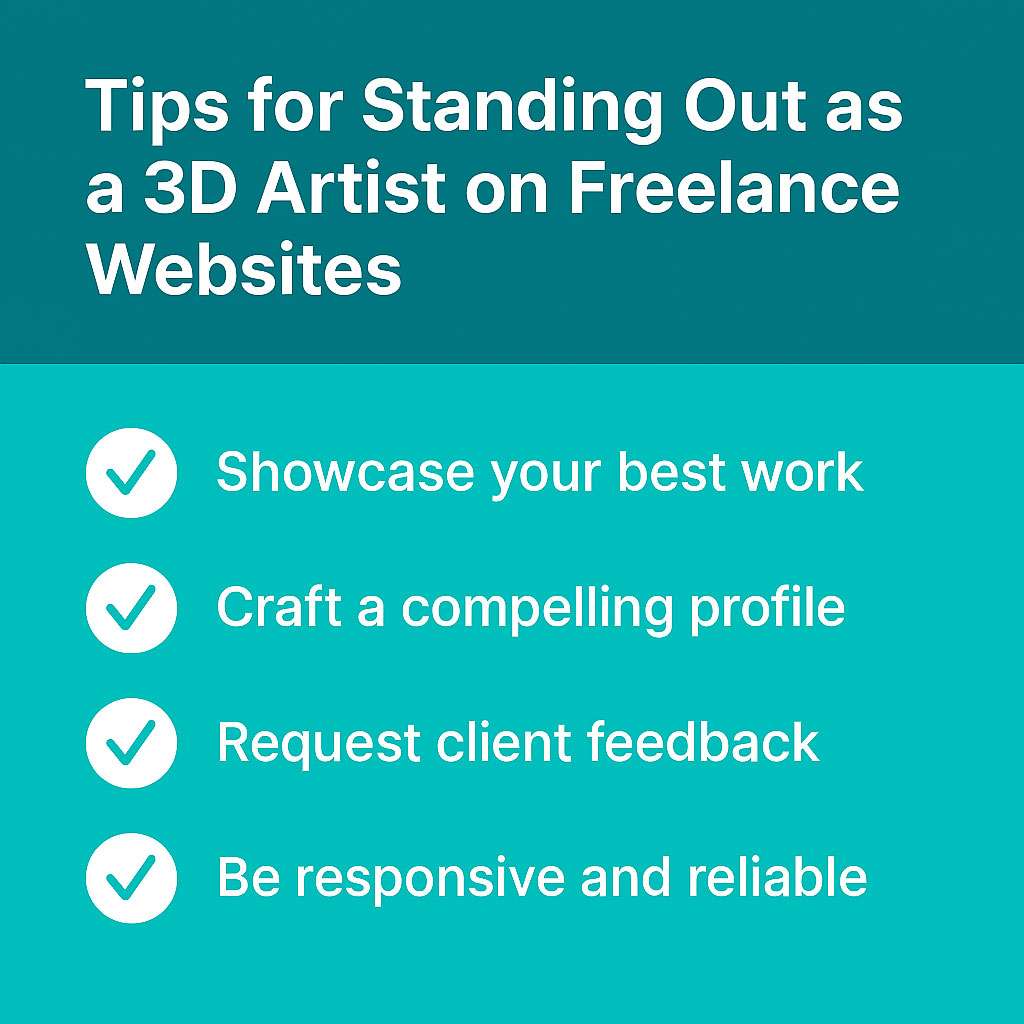
- Your profile: Most artists don’t explain what they solve. They just upload images. A good profile speaks directly to potential clients’ needs.
- Your proposal: Never copy/paste. I keep a loose template, but I rewrite every pitch like I’m speaking to a real person with a real project.
- Your response time: Fast, friendly, and clear communication beats talent every time. Always reply within 24 hours.
- Your follow-up: Most people never send a second message. I do. That’s where many deals are closed.
The platform just opens the door. How you walk through it is what counts.
Build a portfolio that shows your skills
Choose a small selection of renders that show consistent lighting, convincing materials and thoughtful composition. Include different views of each project and briefly explain your role and the choices behind the images. This helps potential clients understand both the result and how you work.
Explore the LearnVray student gallery for inspiration. To develop your rendering skills, explore the 5SRW V-Ray course. When you are ready to pitch your work, read what to include in a 3D rendering proposal.
Final Thoughts on Freelance Platforms for Visualization Artists
The best freelance platforms for architectural visualization aren’t necessarily the ones with the most users.
They’re the ones where your work is respected—and where your message connects with the right people.
Pick one or two. Master how they work. Learn how to stand out. And never forget: people don’t hire portfolios—they hire people they trust.
Build trust. Show up with purpose. And give clients a reason to come back.